The Case for a Personal Safe in 2026
Why a small, well-built safe is one of the more useful things you can put in a closet — and what to look for before you buy one.
Most people don't think about a home safe until they need one. A passport goes missing the morning of a flight. A drawer full of paperwork gets rifled by a contractor's helper. A handgun ends up in a sock drawer because the gun safe is in the garage and the garage is annoying. None of these are dramatic stories. They're just the small, ordinary reasons a personal safe earns its keep.
A safe is one of those objects where the cheap version actively works against you — flimsy hinges, plastic keypads, drift-prone biometrics — and the expensive built-in version is overkill for most of what you actually need to lock up. The interesting category sits in between: portable, well-made, and built around the way people really use them.
What a personal safe is actually for
Real-world threats for most households aren't safecrackers with drills. They're opportunistic theft, curious kids, houseguests, and your own forgetfulness. The job of a personal safe is to make a quick grab impossible, slow down a determined one, and keep a few specific things in a known place.
Concretely: passports and Social Security cards, a backup hard drive, jewelry you wear monthly but not daily, cash for travel, prescription medications, and — for a lot of buyers — a handgun you want accessible but not loose. If your list looks like that, you don't need a 500-pound floor safe. You need something pistol-case sized that opens in under two seconds and stays put when someone tries to walk off with it.
What to look for
- Multiple ways to open it. A biometric reader is the fastest path in, but batteries die and fingers get wet. The good safes pair the sensor with a backup keypad and a physical key — and the physical key uses a real disk-detainer lock, not a wafer lock you could pick with a paperclip.
- A way to bolt it down. A safe that isn't anchored is just a locked suitcase. Look for pre-drilled mounting holes and bolts in the box — closet floor or shelf, vehicle, or under a desk are all valid.
- Battery backup you can actually reach. A USB-C jump port on the outside means a dead battery doesn't mean a locksmith call. This is a small detail that quietly separates considered products from rushed ones.
- Sensible dimensions. Measure the shelf or drawer first. A safe that's an inch too tall ends up on the floor, which means it ends up unbolted, which means it isn't really a safe.
Where biometrics actually help
The argument against fingerprint safes used to be that the readers were slow and unreliable. That's mostly a generation behind. Modern sensors recognize a stored print in well under a second, and the better units let you enroll dozens of prints — useful when you want a spouse, a kid, and three variations of your own thumb all to work.
The real value isn't speed for speed's sake. It's that a fast, reliable lock means you actually use the safe. Anything that takes ten seconds to open gets bypassed within a week — the watch goes back on the nightstand, the passport stays in the junk drawer. A two-second open keeps the habit intact.
Our pick
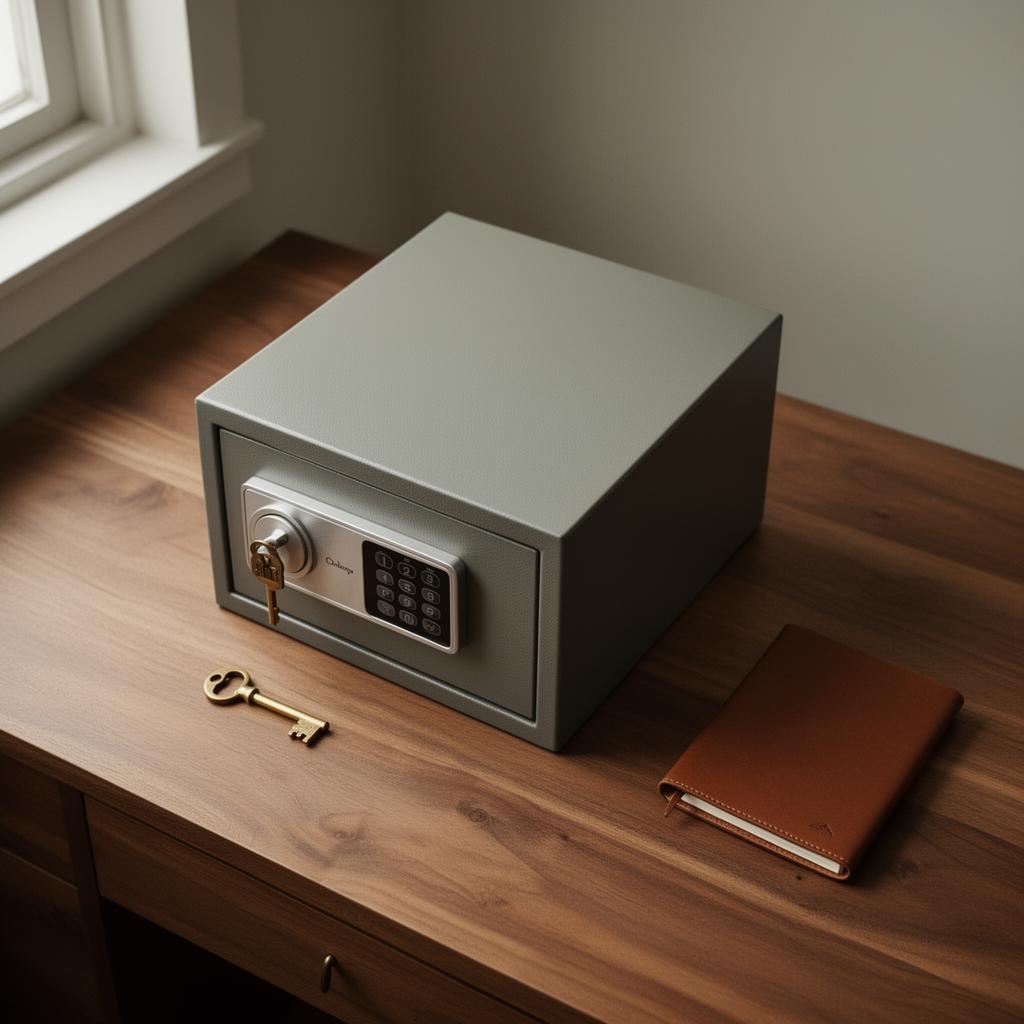
The reason BoostedSafe Elite landed in the collection is that it gets the boring details right. The triple-lock setup (fingerprint, keypad, and a real disk-detainer key) means there's always a way in. The combo lock is front-mounted, so the lid stays flush and the safe doesn't lose half its usable depth to hardware. There's a USB-C jump port for dead batteries, mounting hardware in the box, and pre-drilled holes so anchoring is a 10-minute job, not a project.
It's also, importantly, the right size. Big enough for a passport, a stack of cards, jewelry, and a compact handgun. Small enough to travel with, or to live discreetly on a closet shelf. Most of the value of a safe is whether you actually keep using it, and the Elite is built to stay in rotation.