How to Pick a Leather Wallet That Lasts
What 'full-grain' actually means, why vegetable-tanned leather patinas (and bonded leather cracks), and the small details that separate a 10-year wallet from a one-year wallet.
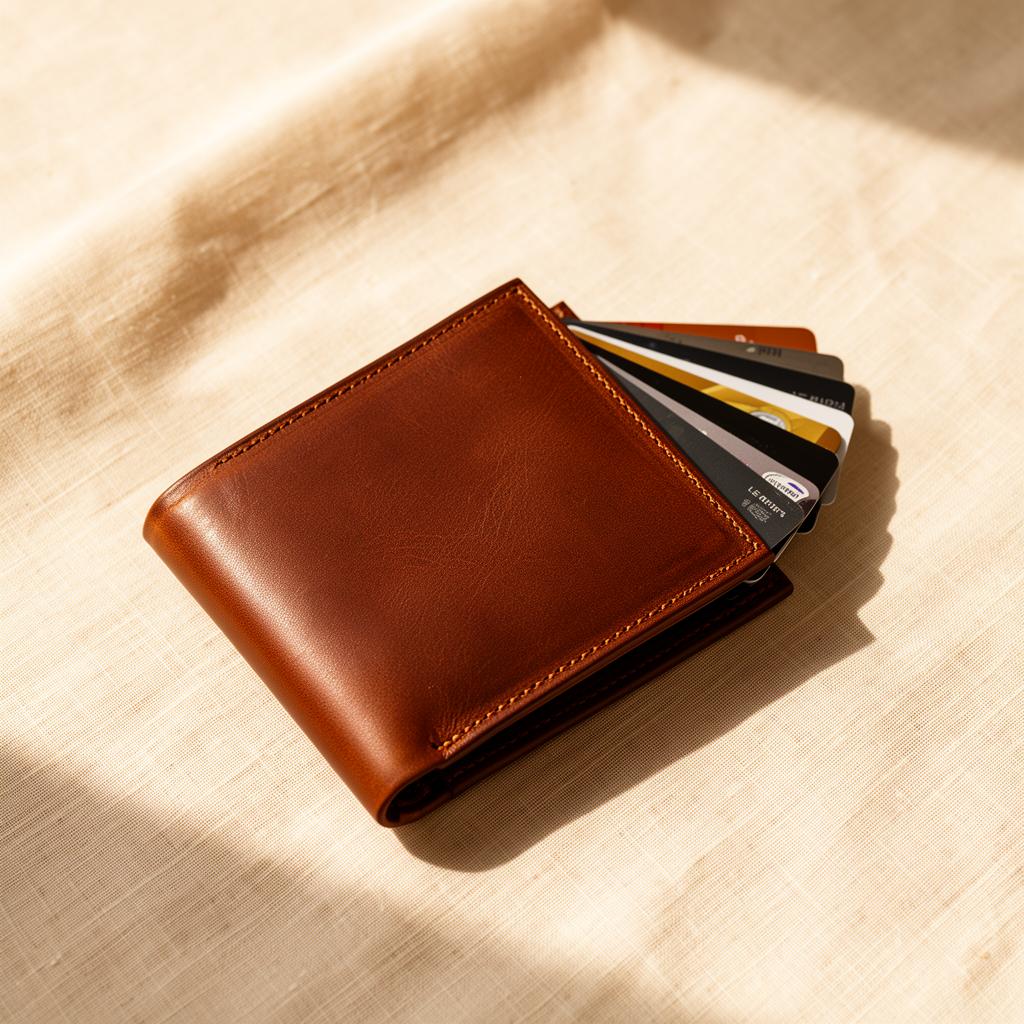
A wallet is one of those objects you touch a hundred times a week and almost never think about — until it cracks at the fold, the stitching pulls, or a card slot stretches out and stops holding anything. The good news is that the difference between a wallet that lasts a year and one that lasts a decade comes down to four or five details, all of which are visible if you know where to look.
The leather grade is the whole game
Almost every problem people have with leather wallets traces back to the leather itself. The grades, from best to worst, are:
- Full-grain: The top, intact surface of the hide. Strongest, most breathable, and the only grade that develops a real patina. This is the answer.
- Top-grain: Full-grain with the very top layer sanded off to hide imperfections. Looks uniform out of the box, but won't patina the same way and is slightly less durable.
- Genuine leather: A marketing term that means "some part of this was once on an animal." Usually the lower, weaker layers. Avoid.
- Bonded leather: Leather scraps ground up and glued together with polyurethane. Cracks within a year. This is the stuff in $20 mall wallets.
If a wallet listing doesn't say "full-grain" prominently, assume it isn't.
Vegetable-tanned vs. chrome-tanned
Tanning is the chemistry that turns animal skin into leather. Vegetable tanning uses plant tannins (oak, chestnut, mimosa) and takes weeks. It produces a firmer, denser leather that darkens beautifully over time. Chrome tanning uses chromium salts and takes a day. It produces softer, more colorfast leather — fine for furniture and car seats, but it doesn't patina, and it has a faintly chemical edge that real leather lovers can pick out immediately. For a wallet you want to live with, veg-tan is the move.
Stitching, edges, and hardware
Look at the stitching: tight, even, with no loose threads, ideally with bonded nylon or waxed linen thread (both age well). Look at the edges: a good wallet has its edges either painted with edge paint (a smooth, sealed finish) or burnished (rubbed slick with wax). Raw, fuzzy edges fray. And look at the hardware — zipper teeth, snap closures, pop-up mechanisms. Cheap metal pits and pulls; quality hardware feels weighty and clicks cleanly.
Slim vs. structured: pick your problem
Wallets sit on a spectrum from minimalist card holders (slim, but limited capacity and no cash slot) to traditional bifolds (more capacity, more bulk). The under-discussed sweet spot is a structured bifold with a card mechanism — something that holds your cash and 8–10 cards but stays flat thanks to a smarter card layout. A pop-up card system, in particular, lets a wallet carry more without doubling in thickness, because the cards stack vertically inside the spine instead of pressing into individual padded slots.
RFID blocking is no longer optional
Almost every card you carry is contactless now. Skimming devices are small, cheap, and don't require contact — bumping you on a subway is enough. RFID-blocking layers built into a wallet body (not slip-in cards you have to remember) are a small, invisible feature that you'll never notice working. Look for it.
Our pick
The Robust Leather Wallet in the collection ticks every box on this list: full-grain vegetable-tanned leather, tight stitching, burnished edges, a pop-up card mechanism that holds 5–6 of your most-used cards plus four additional inner slots, an ID window, a cash pocket, a zip coin pocket, and built-in RFID blocking — no slip-in cards required. It's slim enough for a front pocket once you've cleared out the receipts, structured enough to hold its shape, and the leather is the grade that will get better-looking every year you carry it.
Buy the right wallet once and you stop thinking about it for a decade. That's the whole pitch.